
10 Blockchain Use Cases Solving Real-World Problems
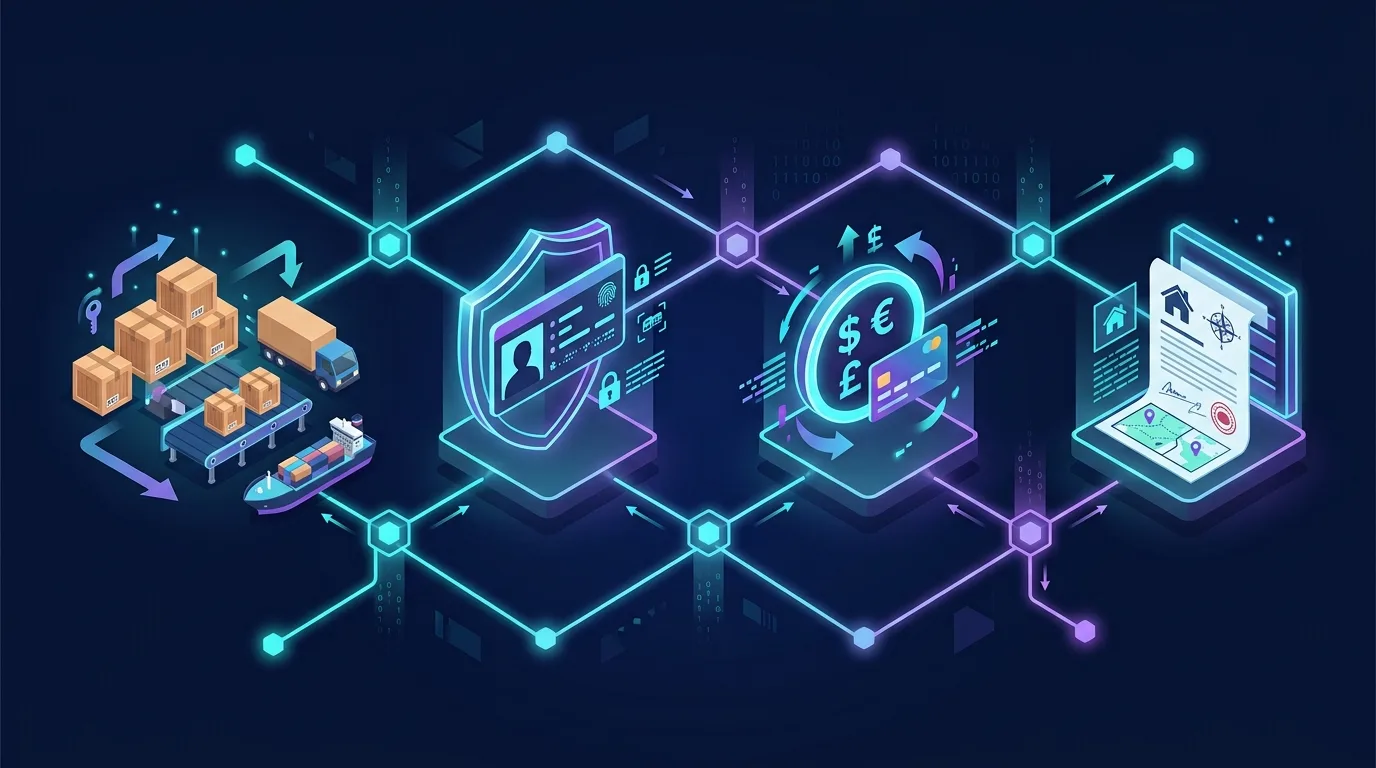
Blockchain use cases go far beyond crypto trading. Discover 10 real-world problems blockchain solves better than traditional systems, from supply chains to digital identity.
Key takeaways
- Blockchain solves trust, transparency, and efficiency problems in sectors like supply chain, healthcare, and finance.
- Real-world blockchain applications go far beyond cryptocurrency, offering practical benefits for entrepreneurs.
- Decentralized technology can reduce costs, prevent fraud, and enable new business models.
- Adoption is growing, but challenges like scalability and regulation remain.
- Understanding these use cases helps you spot opportunities for innovation.
1. Supply Chain Transparency and Traceability
Global supply chains are complex and opaque. A single product may pass through dozens of hands, making it hard to verify origin or detect fraud. Blockchain creates an immutable record of every transaction, from farm to shelf.
Concrete example
Walmart and IBM's Food Trust platform uses blockchain to track produce. In a pilot, they reduced the time to trace a mango's origin from nearly a week to 2.2 seconds (to verify). This helps quickly identify contamination sources.
Bottom line: Blockchain brings unprecedented transparency to supply chains, reducing risk and building consumer trust.
2. Digital Identity and Privacy
Over 1 billion people lack official identification, according to the World Bank (to verify). Traditional identity systems are fragmented and vulnerable to breaches. Blockchain enables self-sovereign identity where users control their data.
Concrete example
Microsoft's ION decentralized identifier network runs on Bitcoin to provide scalable, decentralized IDs. Users can prove credentials without revealing unnecessary personal information.
Bottom line: Blockchain puts individuals in control of their digital identities, enhancing privacy and inclusion.
3. Healthcare Data Management
Medical records are often siloed, leading to inefficiencies and risks. Blockchain can securely share patient data across providers while maintaining privacy and audit trails.
Concrete example
MediLedger uses blockchain to verify pharmaceutical contracts, reducing errors and fraud in drug rebates. It processes billions of dollars in transactions annually (to verify).
Bottom line: Blockchain improves data integrity and interoperability in healthcare, saving lives and costs.
4. Financial Inclusion and Cross-Border Payments
Traditional banking excludes millions due to lack of infrastructure or high fees. Blockchain-based remittances can be faster and cheaper.
Concrete example
Stellar partners with MoneyGram to enable low-cost transfers. In 2023, they processed over USD 1 billion in transactions (to verify).
Bottom line: Blockchain democratizes finance, offering affordable access to global markets.
5. Real Estate and Land Registry
Property records are often paper-based and prone to fraud. Blockchain provides tamper-proof land titles, reducing disputes.
Concrete example
Georgia (the country) registered over 1.5 million land titles on the Bitcoin blockchain via Bitfury's Exonum platform (to verify). This streamlined property transactions.
Bottom line: Blockchain secures property rights, unlocking capital and reducing corruption.
6. Voting Systems
Paper voting is susceptible to fraud and errors. Blockchain-based voting can increase transparency and accessibility.
Concrete example
In 2020, Utah County used a blockchain-based app for military and overseas voters, allowing secure remote voting (to verify).
Bottom line: Blockchain enhances election integrity, though scalability and security remain challenges.
7. Energy Trading
Centralized energy grids waste power and limit consumer choice. Blockchain enables peer-to-peer energy trading.
Concrete example
LO3 Energy's Brooklyn Microgrid lets residents trade solar energy using blockchain. Participants buy and sell locally generated power.
Bottom line: Blockchain empowers consumers and promotes renewable energy adoption.
8. Intellectual Property and Royalties
Creators often lose revenue due to complex rights management. Blockchain automates royalty payments via smart contracts.
Concrete example
Myco (formerly Mediachain) uses blockchain to track music rights and ensure artists get paid when their work is used.
Bottom line: Blockchain ensures fair compensation for creators, fostering innovation.
9. Food Safety and Anti-Counterfeiting
Counterfeit goods cost the global economy over USD 500 billion annually (to verify). Blockchain verifies authenticity.
Concrete example
De Beers' Tracr platform tracks diamonds from mine to retailer, ensuring they are conflict-free.
Bottom line: Blockchain combats counterfeiting, protecting brands and consumers.
10. Carbon Credits and Climate Action
Carbon markets suffer from double-counting and lack of transparency. Blockchain provides a verifiable ledger for carbon credits.
Concrete example
IBM's Climate Ledger Initiative works with Veridium to tokenize carbon credits, ensuring each credit is unique and traceable.
Bottom line: Blockchain boosts trust in carbon markets, accelerating climate action.
Summary table
| Use case | Problem solved | Example |
|---|---|---|
| Supply chain | Lack of transparency | Walmart & IBM Food Trust |
| Digital identity | Fragmented, insecure IDs | Microsoft ION |
| Healthcare | Siloed data | MediLedger |
| Financial inclusion | High fees, exclusion | Stellar & MoneyGram |
| Real estate | Fraudulent records | Georgia land registry |
| Voting | Fraud, accessibility | Utah County pilot |
| Energy trading | Centralized grids | LO3 Energy |
| IP & royalties | Unfair compensation | Myco |
| Anti-counterfeiting | Fake goods | De Beers Tracr |
| Carbon credits | Double-counting | IBM Climate Ledger |
Common mistakes to avoid
- Assuming blockchain fits every problem; sometimes a traditional database is better.
- Ignoring scalability and energy consumption of some consensus mechanisms.
- Overlooking regulatory compliance, especially in finance and healthcare.
- Forgetting user experience: if it's too complex, adoption will fail.
- Believing blockchain is automatically secure; smart contracts can have bugs.
Conclusion
Blockchain is not a silver bullet, but for these 10 problems, it offers a compelling alternative to traditional systems. Entrepreneurs who understand these blockchain use cases can build the next wave of impactful solutions. Which problem would you tackle first? Share your thoughts.
FAQ
Is blockchain only for cryptocurrency?
No, blockchain has many applications beyond crypto, as shown in these use cases.
What industries benefit most from blockchain?
Supply chain, finance, healthcare, and identity management are early adopters.
Is blockchain scalable enough for mass adoption?
Layer 2 solutions and new consensus mechanisms are improving scalability, but challenges remain.
How can entrepreneurs start with blockchain?
Identify a trust or transparency problem, then explore existing platforms or build on open-source frameworks.
Is blockchain environmentally friendly?
Energy consumption varies; proof-of-stake and other efficient consensus mechanisms reduce impact.
Comments (0)